01
Restricted Attention
Cross-frame communication is routed solely through camera and register tokens in selected front-end blocks, eliminating dense patch-to-patch interactions.
KargoBot · University of Chinese Academy of Sciences · Zerith Robotics
Tsinghua University · Nanyang Technological University
* Equal contribution † Corresponding author
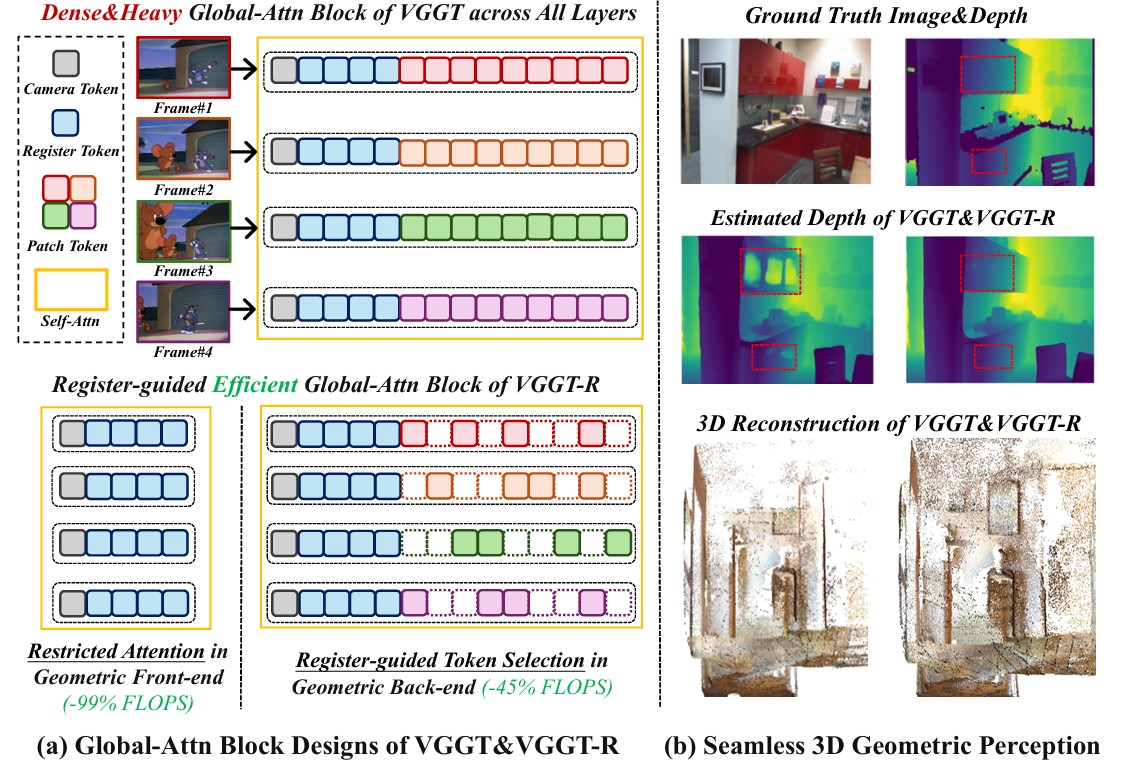
Large-scale 3D vision foundation models such as Visual Geometry Grounded Transformer (VGGT) deliver strong performance across geometric perception tasks, but the quadratic complexity of global attention severely limits long-sequence scalability. We present VGGT-R, a training-free framework that repurposes register tokens to reduce global attention overhead while preserving geometric performance. A fine-grained layer-wise analysis reveals that registers act as compact cross-frame proxies. We split the network into a geometric front-end with restricted attention and a geometric back-end with register-guided token selection. VGGT-R achieves 3.2× speedup without explicitly pruning tokens, while improving depth estimation by approximately 10% and remaining competitive across other geometric tasks.
A layer-aware design that gives registers a different job at each stage of geometric reasoning.
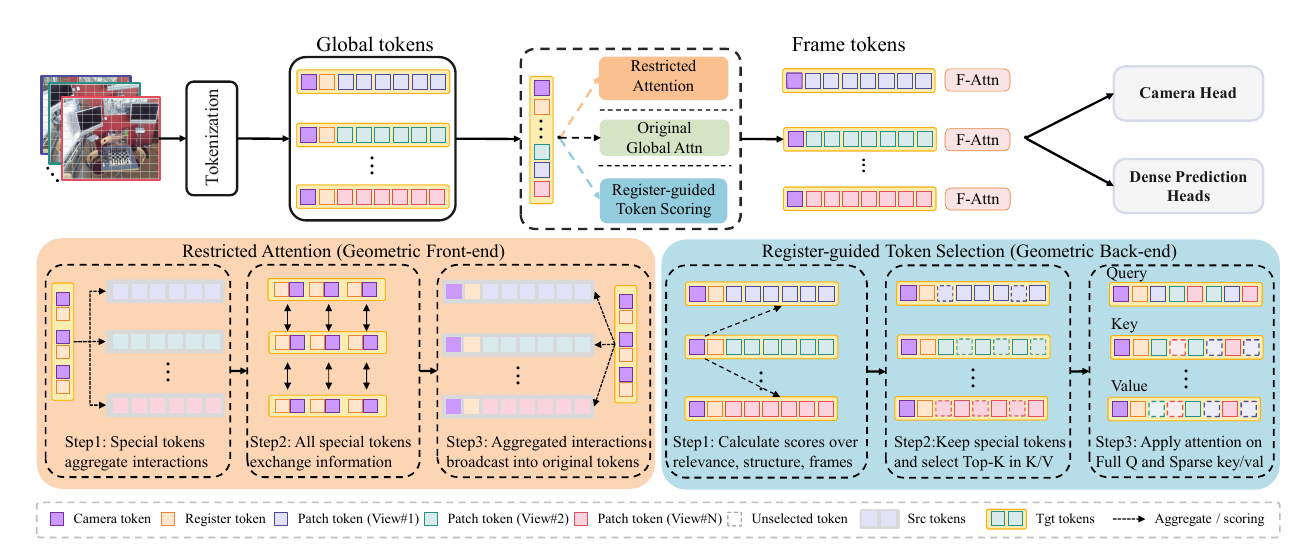
Cross-frame communication is routed solely through camera and register tokens in selected front-end blocks, eliminating dense patch-to-patch interactions.
Three complementary signals preserve relevant, structurally distinctive and cross-frame novel patches in the back-end keys and values.
The original token layout and prediction heads remain unchanged. No additional data, fine-tuning or explicit patch-token pruning is required.
VGGT-R improves the accuracy–efficiency trade-off across depth, point clouds and camera pose estimation.
| Frames | Method | AbsRel ↓ | RMSE ↓ | RMSE-log ↓ | δ1 ↑ | δ3 ↑ |
|---|---|---|---|---|---|---|
| 100 | VGGT | 0.0707 | 0.2576 | 0.1353 | 0.9289 | 0.9917 |
| FastVGGT | 0.0691 | 0.2504 | 0.1331 | 0.9308 | 0.9923 | |
| VGGT-R (Ours) | 0.0664 | 0.2380 | 0.1264 | 0.9370 | 0.9929 | |
| 500 | VGGT | 0.0698 | 0.2525 | 0.1334 | 0.9294 | 0.9923 |
| FastVGGT | 0.0665 | 0.2535 | 0.1293 | 0.9346 | 0.9932 | |
| VGGT-R (Ours) | 0.0662 | 0.2333 | 0.1243 | 0.9384 | 0.9934 |
Qualitative comparison of dense depth, reconstruction quality and register-guided token scoring.
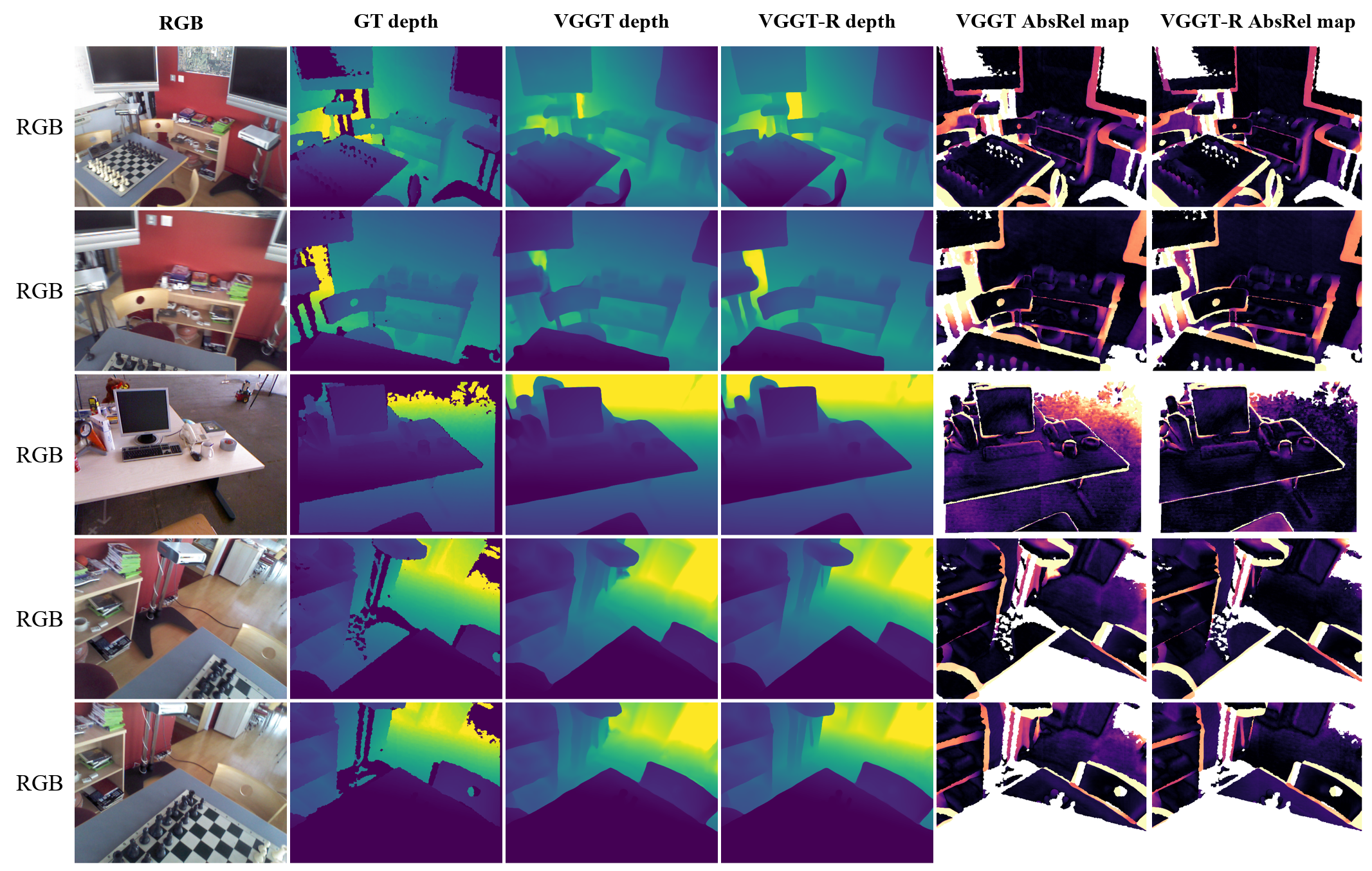
VGGT-R reduces depth errors around object boundaries and challenging regions while producing more coherent geometry.

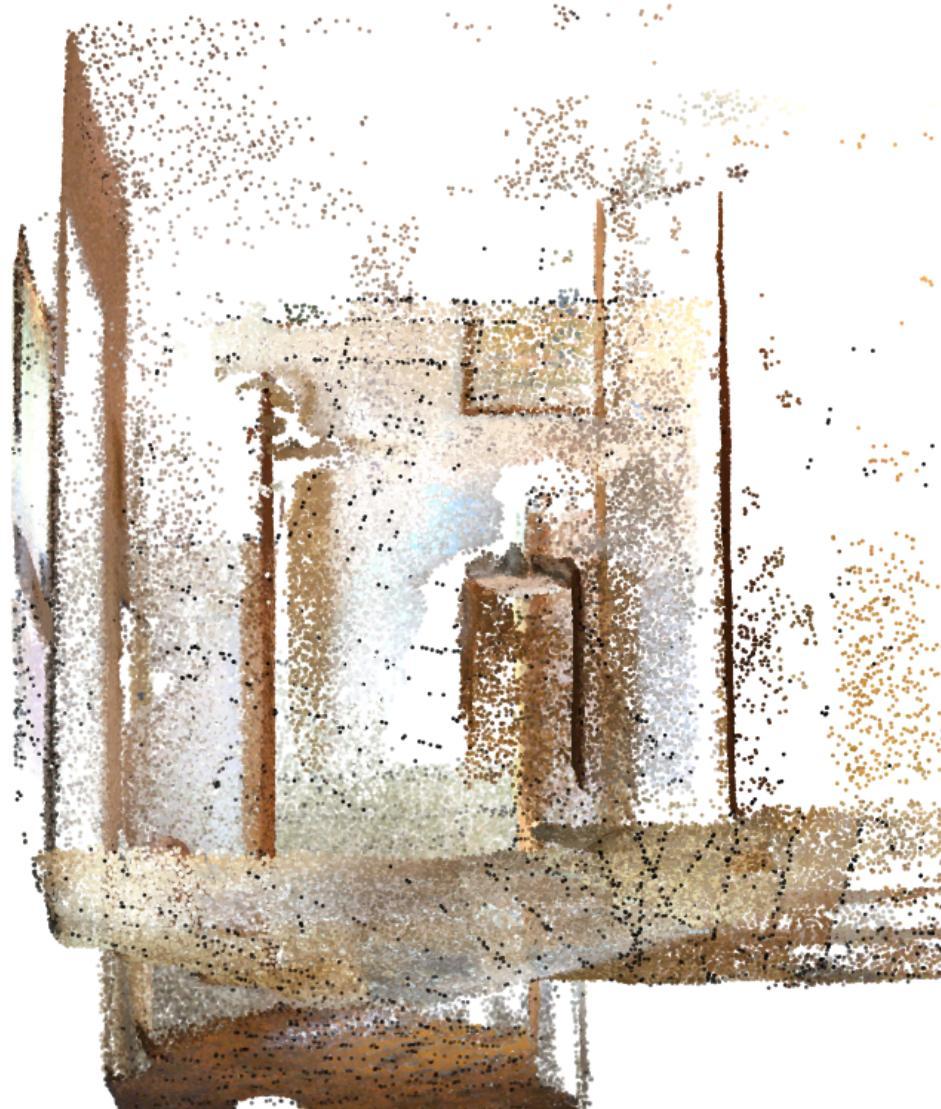
Dense reconstructions retain fine-grained spatial information without explicit patch-token pruning.
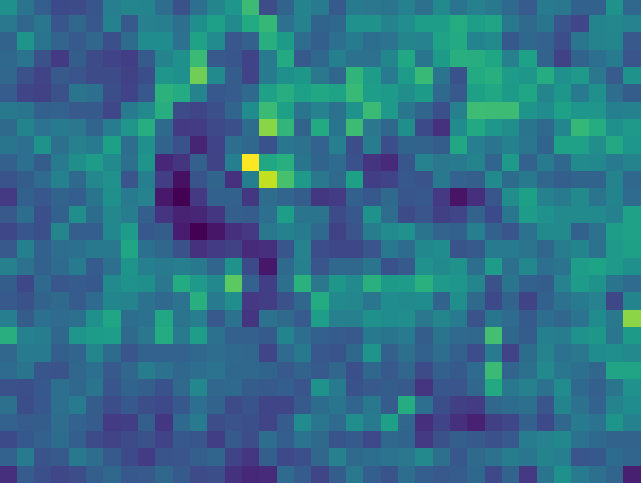
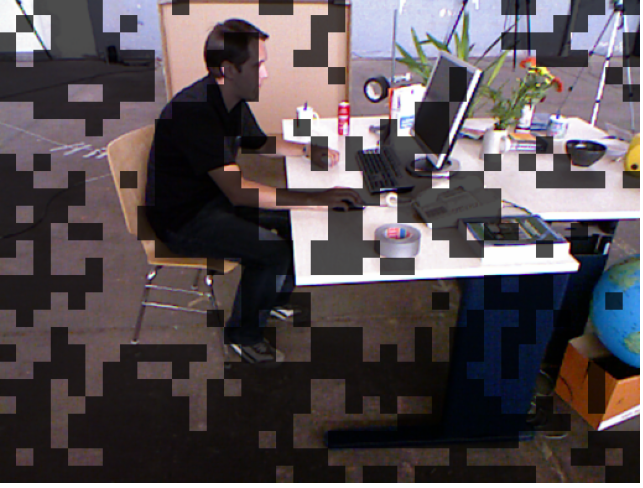
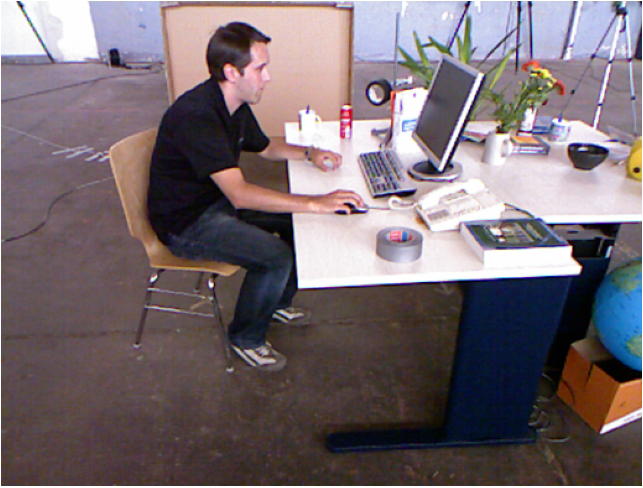
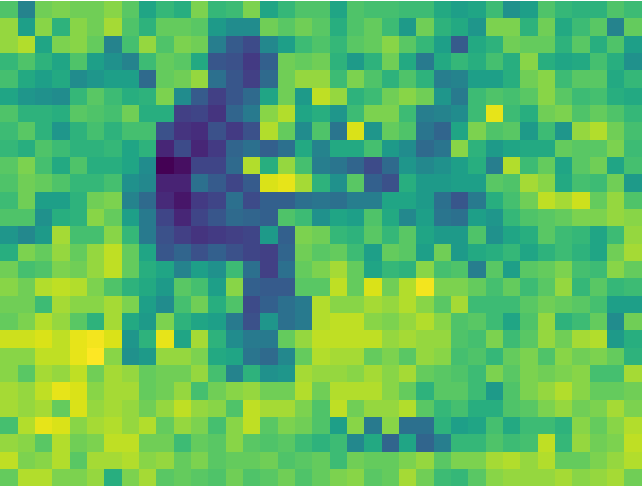
The three cues capture complementary semantic, structural and temporal information.
@misc{jiang2027vggtr,
  title  = {VGGT-R: You Can Really Accelerate Vision Geometry Grounded
            Transformer with the Underestimated Registers},
  author = {Jiang, Xuefeng and Geng, Zibin and Ma, Yuan and Li, Jia
            and Jia, Peijin and Sun, Sheng and Huang, Wenke and others},
  year   = {2027}
}